Aurelia Institute
company
Aurelia Institute
role
Chief Design Officer
year
2021-5
Challenge
The space architecture startup I co-founded, Aurelia Institute, needed to demonstrate that it was in the business of architecture, not technical demos. The challenge: how to leverage full-scale habitat design to provide the most value to Aurelia's R&D portfolio, education & outreach goals, and fundraising efforts. Most importantly, the structure needed to make space feel tangible to those of us on Earth.
My Role
As Chief Design Officer, I hired and led a multidisciplinary team of 10 to design, fabricate, and deploy a 30-foot space habitat mockup at exhibitions across 3 cities, hosting over 10,000 visitors. I developed the business strategy, creative direction, and organizational infrastructure to build a habitat that was part R&D research platform and part experiential exhibition on the future of life in space.
Outcomes

Background
TESSERAE Pavilion’s core creative challenge was to build a human-centered vision of life in space that tackled the question — what would it take to make space feel like home? To answer this question, I synthesized insights from 20 astronaut interviews I conducted for the MIT Astronaut Ethnography Project on life in space "beyond the mission." A key finding: to build a sense of home, astronauts organize improvised rituals of mutual care, particularly around growing, preparing, and sharing food. This idea of “breaking bread in space” became the motivation to create environments where humans can thrive, not just survive, in orbit.
Approach
Before design work could begin, I met with my leadership team to define strategic goals and success criteria for the project. I proposed three core goals to provide the most value to the Institute and our mission —
To build a modular, exhibition-class structure, deployable at high-impact fundraising venues
To develop a physical ‘platform’ for human-scale R&D, incubating at least three functional experiments
To get feedback from students, educators, and the general public on their visions of "home" in space
Phase 1: Strategic Alignment and Structural Development (Months 1-3)
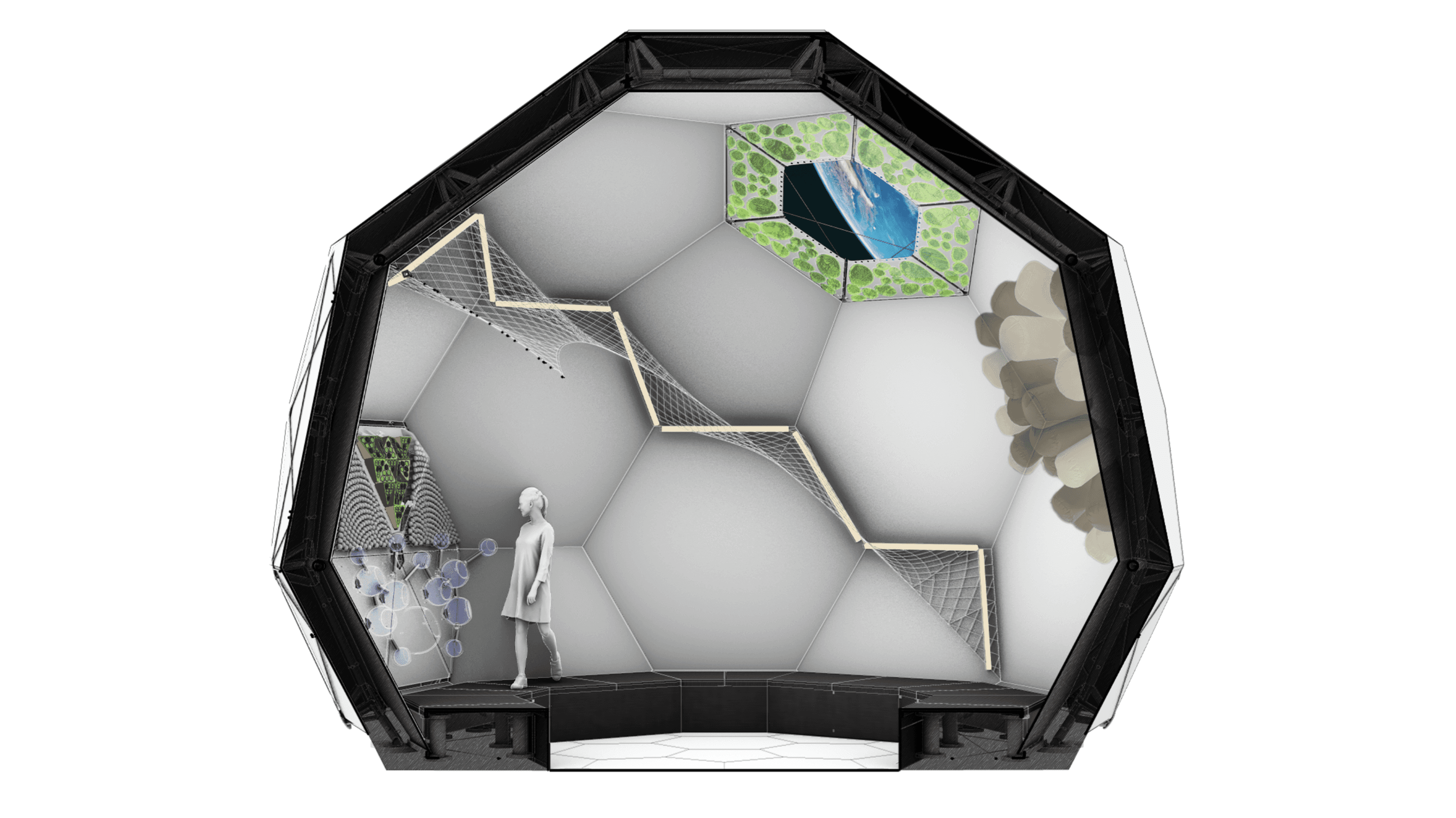
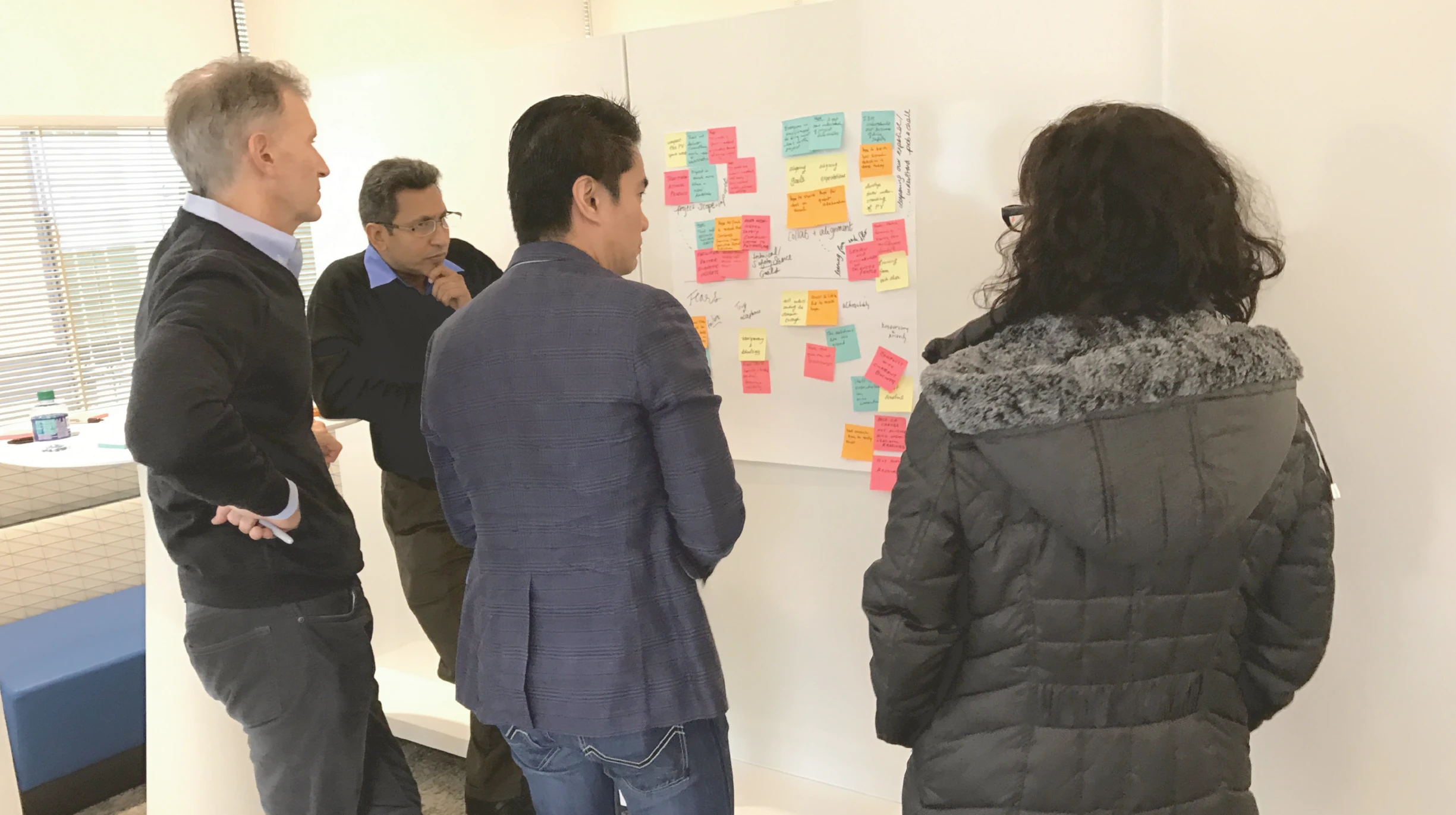
I hired and scaled a core team of 6 architects, designers, and engineers, along with subject matter experts in plant biology and food science. I built operational frameworks including design review cadence, documentation standards, budget management processes, and training protocols. This infrastructure became the blueprint for how Aurelia now executes complex projects. I facilitated intensive concept workshops with experts to align on overall design vision and identify core design elements that would serve both R&D and narrative objectives, while establishing constraints around timeline, budget, and structural safety.
Phase 2: Parallel Workstream Development (Months 4-18)

From this foundation, I organized five interdependent design and fabrication workstreams, each with dedicated leads:
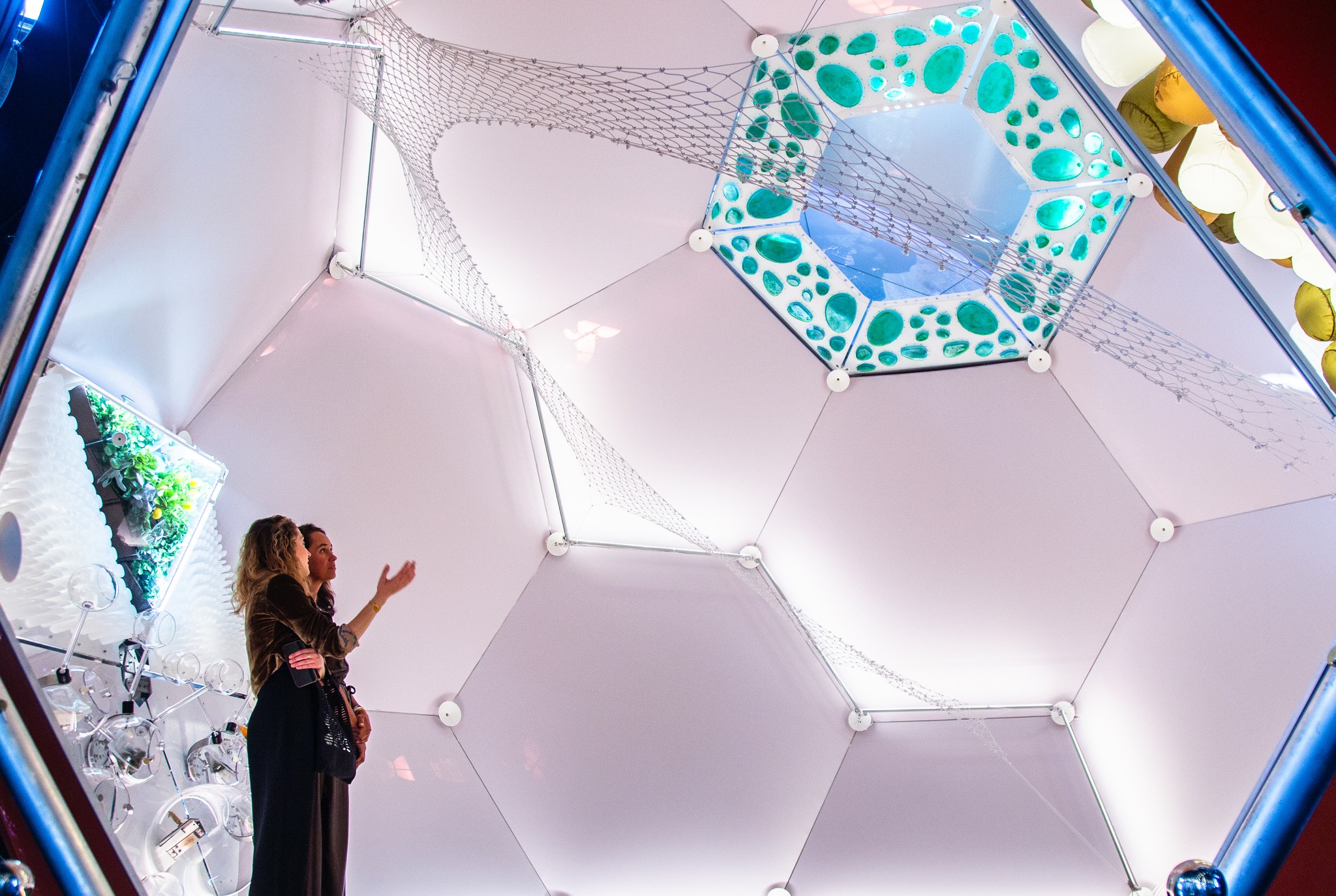
Structural Shell — Geodesic structure true to TESSERAE concept while meeting gallery safety codes and heavy loads
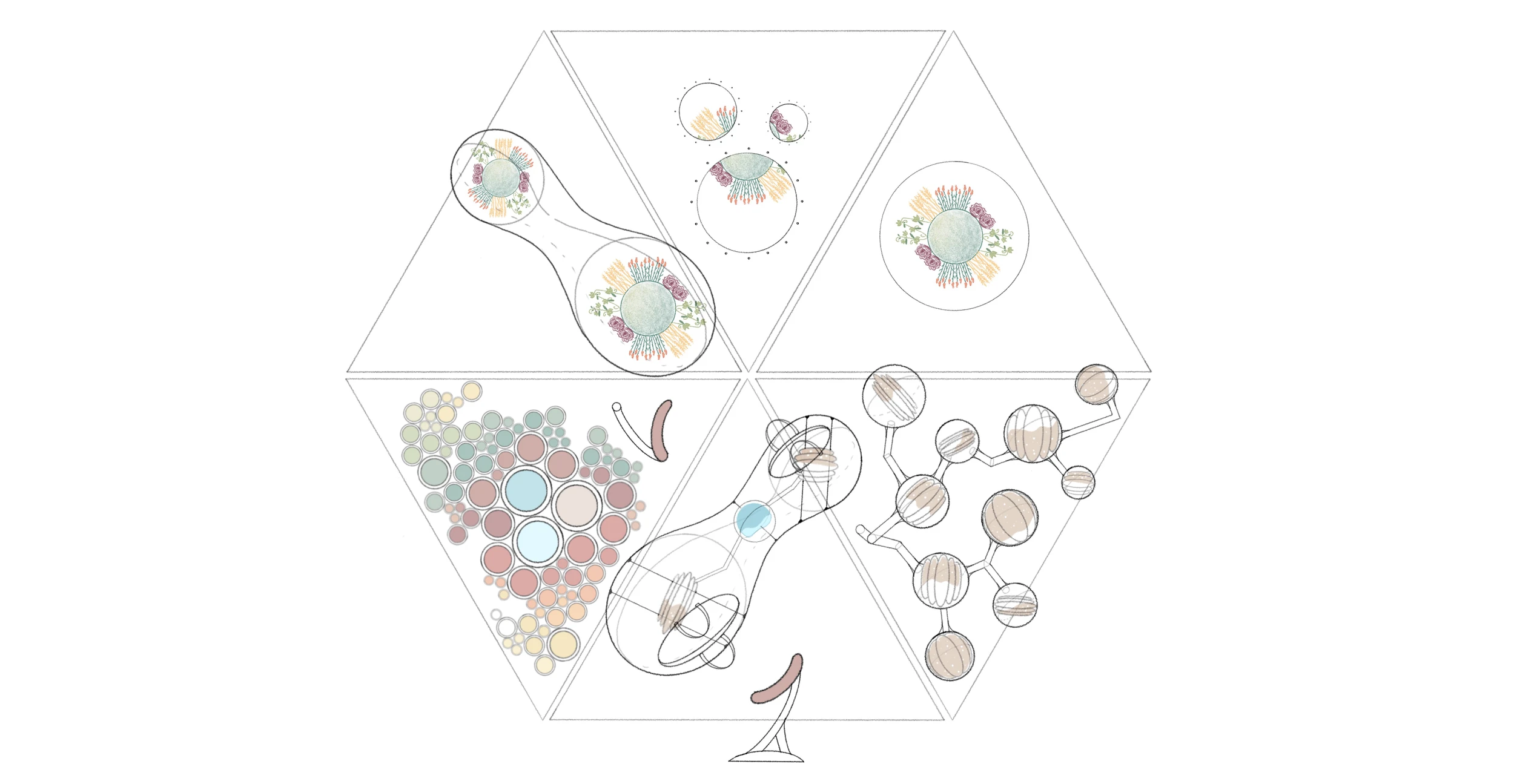
Green Vault — Functional aeroponic system for herbs and vegetables as proof of concept for closed-loop food systems
Fermentation Station — Working microbial cultivation demonstrating food preservation and flavor in space
Inflatable soft architectures — Sea anemone-inspired soft structures enabling movement and sensory exploration
Passive environment — Netting, storage tiles, and domestic details creating cohesive interior narrative
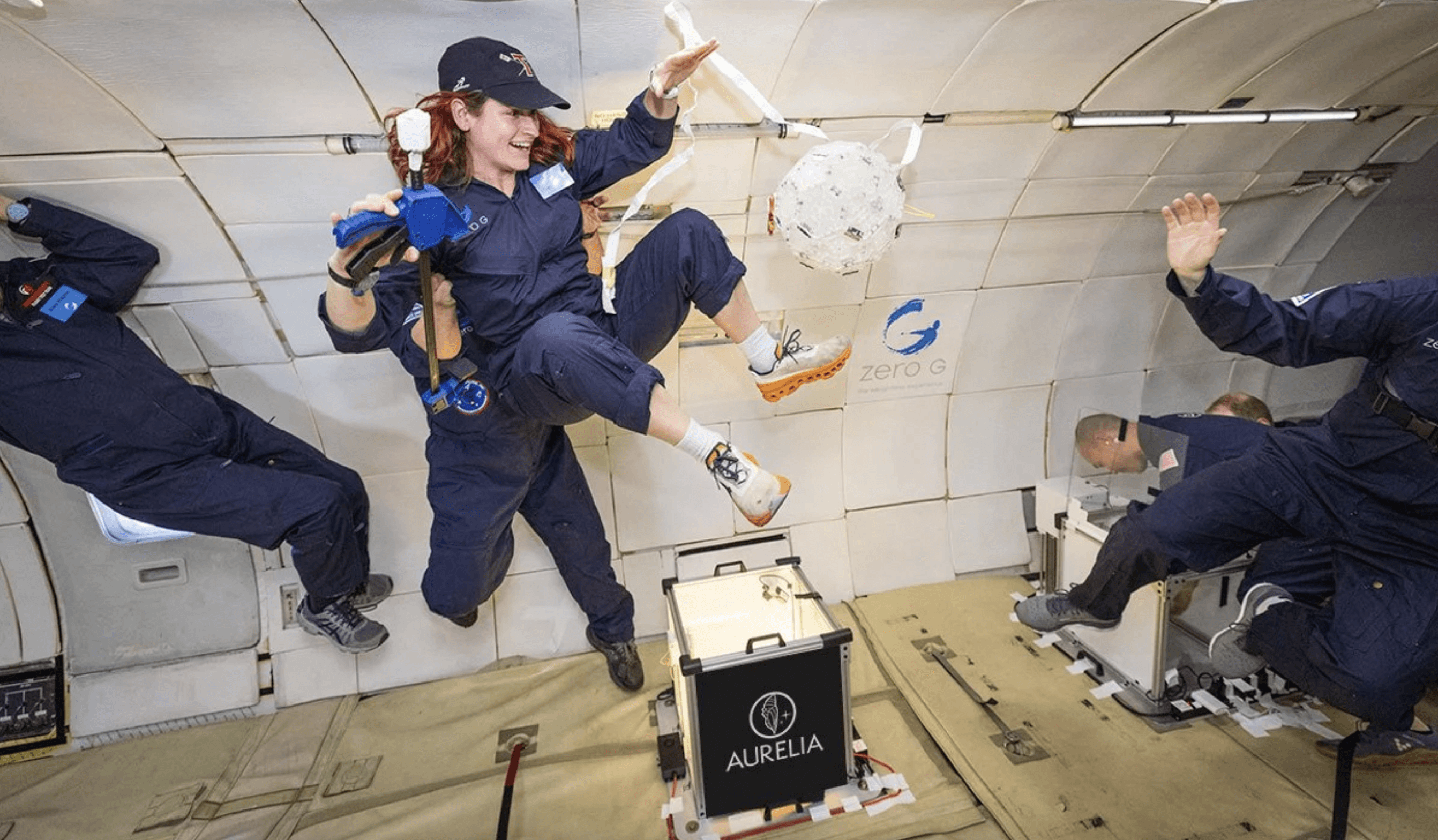
I organized biweekly core team reviews to ensure aesthetic and technical coherence while the workstreams maintained autonomy in their domains. In addition, we developed the workstreams' functional artifacts into parabolic flight experiments, in order to stress test functional requirements in microgravity.
Phase 3: Integration & Fabrication (Months 19-24)
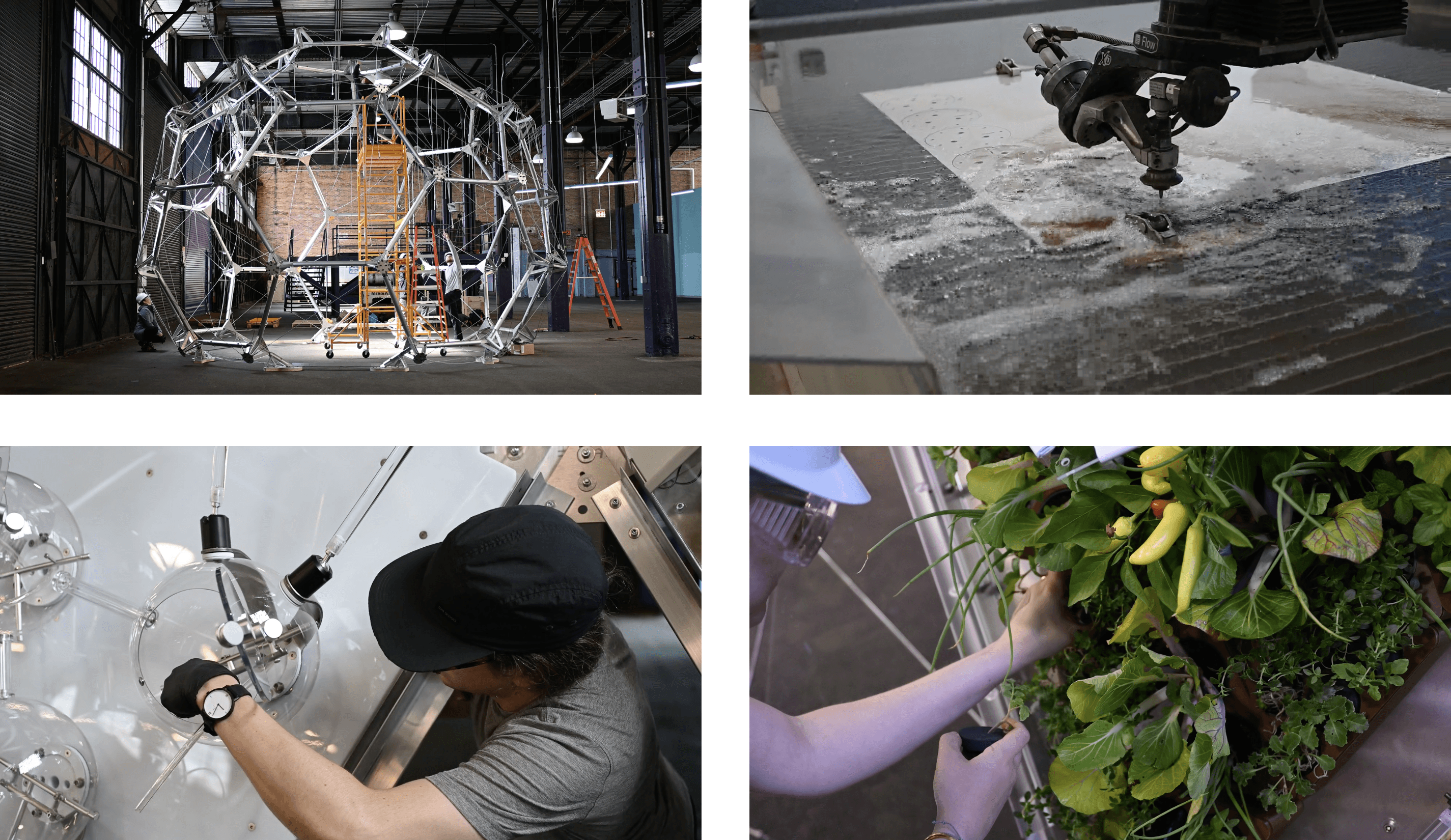
I transitioned from hands-on design direction to operational leadership, coordinating multi-day onsite builds, managing technical training for specialized assembly techniques, and overseeing budget allocation across competing priorities. As the team scaled, I delegated specialist functions, maintaining overall creative vision as execution became more distributed.
To engage with potential venues and local educators, I supported a team building education and outreach materials on the exhibition pavilion, including how today's scientific research informed the design of the structure and artifacts.
Impact

The TESSERAE exhibition pavilion launched in mid-2024 and has become Aurelia’s primary physical platform for human-scale research and educational engagement. To date, the pavilion has been displayed in three cities across the US and Canada, where it has reached over 10,000 visitors of all ages.
It has also proven to be a valuable asset for outreach and partnerships, with a successful deployments at the Museum of Flight’s “Home Beyond Earth” exhibition and as part of the TED 2025 Conference in Vancouver. A finalist in the 3D Pioneers International Design Competition, the TESSERAE Pavilion has been featured in Dezeen, Domus, Fast Company, and MIT Technology Review.
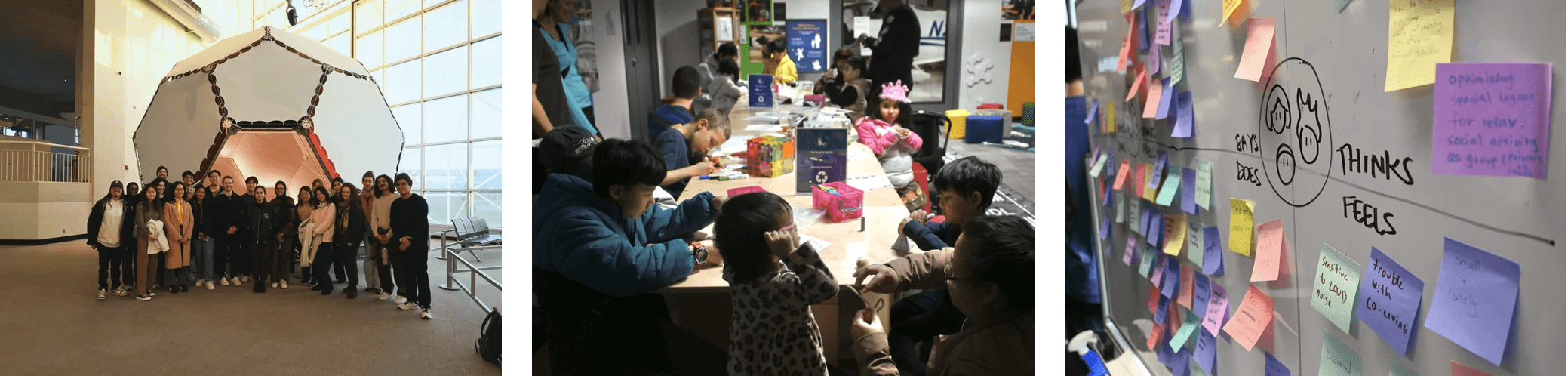
Over the 5-month exhibition, I led 10 community outreach events reaching hundreds of students in the region, from K-5 design workshops to keynoting the Washington Aerospace Scholars program. We collected significant feedback from visitors, museum partners, and VIP stakeholders. Museum educators described the pavilion as “the calming place we send parents with young children when the museum becomes overwhelming,” while a guest from the United Nations Development Program shared, “you make life in space feel real, especially for the next generation who might build it.”
/ case studies